

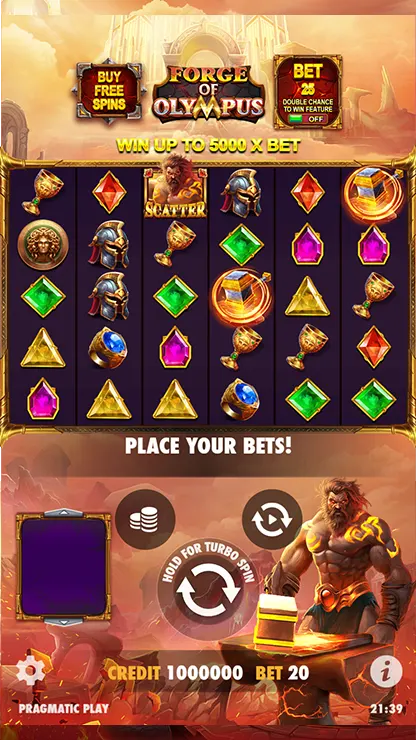
As we examine the online slot market popular with UK players, the technical architecture backing a game is as essential as its visual appeal. Pragmatic Play’s Forgeofolympusslot is a advanced piece of software engineering built for seamless performance, fair play, and engaging mechanics. We will analyze the core systems that make this title function, from its random number generator (RNG) and cascading reel engine to its network and security measures. Understanding this architecture shows why the game performs reliably across thousands of devices in the UK, maintains certified fairness, and delivers its signature 6×5 grid, tumble feature, and multiplier mechanics without a glitch. This analysis provides a detailed, objective look at the technical foundations supporting the player experience.
The Core Engine: RNG and Verified Fairness
At the heart of Forge of Olympus is its Random Number Generator (RNG), a complex algorithm making certain every spin’s outcome is independent and random. This persistently running system creates thousands of numbers per second. When a UK player hits ‘spin’, the RNG latches to that precise moment, picking a value linking to a certain symbol arrangement on the virtual reels. This process is rigorously tested and approved by autonomous auditors like eCOGRA and iTech Labs, common for regulated UK operators. This external validation assures the game’s expected Return to Player (RTP) of 96.50% is statistically sound, forming the bedrock of reliance in the game’s design for every player.
The Cascading Wins Engine
The Tumble or Cascading Wins mechanic is a central gameplay pillar, and its operation is a marvel of systematic design. After a winning group is detected and rewarded, the game engine activates a specific, multi-step process. It clears the winning symbols from the grid, commands symbols above to fall downwards to fill vacancies, and simultaneously calls the RNG to generate new symbols for the empty top rows. This entire cycle—scan, remove, drop, replenish—must happen instantly and over and over until no new winning clusters are formed. The server manages this dynamic process for every active player, guaranteeing the symbol drop physics and timing are consistent, which is critical for the anticipation the feature produces.
Security Standards and Data Integrity
Security is essential. The complete gaming session is coded using Transport Layer Security (TLS), safeguarding transferred data. The integrity of each game round is also secured. A individual spin identifier is generated for each spin, and all applicable details—RNG initial numbers, resulting grid layouts, payouts—are signed with digital keys. This forms an permanent cryptographic proof for verification. This standard of reliability is common for reputable providers and is critical for guaranteeing player confidence and compliance with the UK Gambling Commission’s stringent requirements.
System Design and Delay Factors
Every action involves communication between the player’s device and remote game servers. The architecture is structured for minimal delay communication, crucial for a fast-paced game with falling symbols. A game spin from a UK player is directed via their ISP, through the casino’s platform, to Pragmatic Play’s dedicated game servers, presumably situated in the EU for best regional performance. The complete cycle is processed server-side for security, with only result information sent back. This client-server setup prevents tampering but requires a highly optimised, stable connection to seem immediate.
Audio-Visual Asset Management and Delivery
The engrossing experience is powered by a sturdy asset management system. Forge of Olympus uses high-resolution graphics and vibrant sound effects delivered or stored optimally to the player’s device. For UK players, assets are frequently provided from a locally close Content Delivery Network (CDN) node to minimise latency. The HTML5 client caches key assets for fluid animations. The system manages quality with performance, perhaps lowering graphical fidelity on older mobile devices while keeping core game logic integrity, ensuring accessibility across the wide UK hardware landscape.
Grid and Reel Systems: A Dynamic Framework
Transitioning from the abstract RNG to the on-screen display, the game uses a dynamic 6-reel, 5-row grid structure. The system must track the location and status of 30 separate symbol cells each spin. Forge of Olympus utilizes a ‘cluster pays’ system, where the algorithm scans the entire grid for clusters of eight or more matching symbols touching horizontally or vertically. This necessitates a live, multi-pass scanning system that identifies all successful clusters concurrently, calculates the total payout, and then readies the grid for the cascade process. The architecture efficiently handles this multi-phase process within milliseconds, ensuring the game feels seamless and snappy during potentially long tumble sequences.
Multiplication System and Persistent State
A critical advancement is the ongoing multiplier mechanism attached to the tumble feature. This demands the game architecture to hold a continuous counter that remains across tumble events within a single spin but resets for a new standard spin. The system records the multiplier increment and executes it correctly to the payout of the *subsequent* winning cluster. This state control is complex; the game logic must perfectly link the accurate multiplier figure with the right tumble sequence index and ensure precise mathematical application before adjusting the player’s balance. This continuous data processing within a unstable game round is sophisticated real-time accounting.
Mobile-First Architecture and Cross-Platform Support
Understanding most UK players use mobile devices, Forge of Olympus was developed with a mobile-first philosophy. This includes key architectural decisions:
- Touch-Based Controls: The layout features larger, touch-optimized touch targets for buttons.
- Performance Optimisation: The HTML5/WebGL rendering code is tuned to run efficiently on diverse iOS and Android platforms without draining the battery excessively.
- Adaptive Delivery: The platform determines device category and display size, serving an appropriately scaled version of the layout and controls.
Back-end Analytics and Live Running
The design includes a thorough backend analytics system not visible to players. This aggregates anonymous data on gameplay performance, feature triggers, and session lengths. For game developers and British operators, this data is vital for monitoring game health, assessing player interaction, and guaranteeing mathematical accuracy. The real-time operations system allows for remote control of specific non-RNG variables and is utilized to implement updates seamlessly without interruption. This operational layer guarantees the game continues to be stable, engaging, and commercially viable within the competitive UK market.
FAQ
Is it true that the Forge of Olympus slot game trustworthy for UK players?
Absolutely. It uses a certified Random Number Generator (RNG) independently reviewed by organizations like eCOGRA. This ensures every spin is fair. The published RTP of 96.50% is mathematically confirmed, and performance adheres to UK Gambling Commission standards, assuring fairness.
How does the cascading wins feature function technically?
When a winning cluster is identified, the engine carries out a process: it eliminates winning symbols, moves symbols above into gaps, and produces new symbols for the top rows via the RNG. This cycle is processed server-side in milliseconds, generating the “tumble”. It persists until no new wins are identified.
Why does the multiplier sometimes return to zero during gameplay?
The multiplier is persistent only within a single spin’s tumble sequence. It goes up by +1 per consecutive tumble but returns to x1 at the start of a new spin. This is an deliberate part of the game’s mathematical model and volatility, managed by state-tracking logic.
Is it true that my personal data safe when playing this slot online?
Absolutely. Reliable UK casinos and Pragmatic Play implement robust security. Gameplay communication is protected using TLS. Financial transactions are managed separately by the casino’s secure payment systems. The game handles anonymous round data for functional purposes, not personal identification.
Am I able to play Forge of Olympus on my mobile phone in the UK?
Yes. The game is created with HTML5 technology, keeping it fully compatible with iOS and Android devices without a download. The architecture is optimised for mobile, with touch-friendly controls and efficient asset delivery for smooth performance on most UK smartphones and tablets.
近期评论